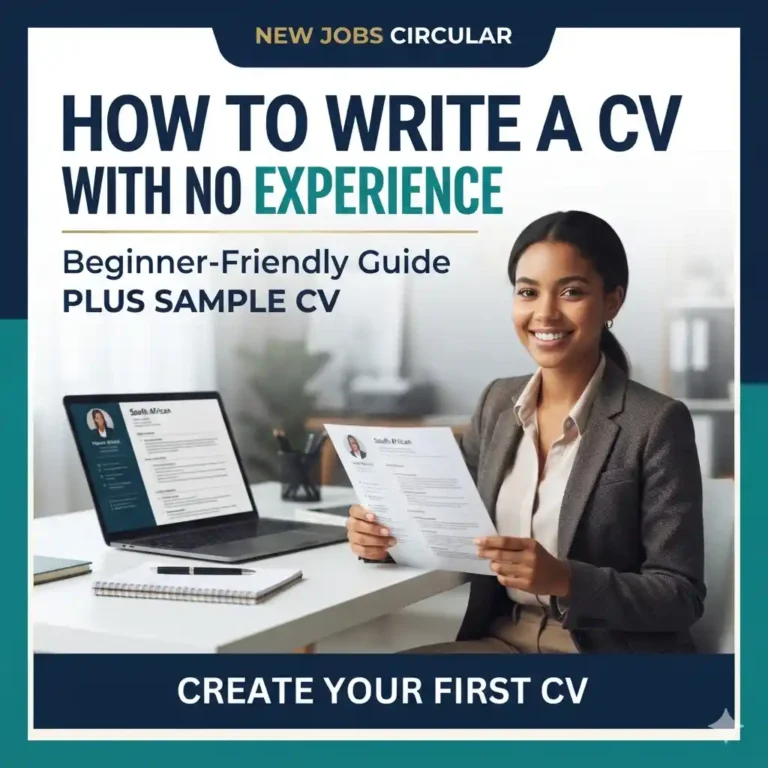
Writing your first CV can feel difficult when you have never had a formal job. You may wonder what to include, how to describe your skills, and how to convince an employer to consider you without work experience.
The good news is that you do not always need previous employment to create a strong CV. Your education, school or university projects, volunteer activities, practical skills, achievements, and willingness to learn can all help demonstrate your potential.
This guide explains how to write a CV for a job with no experience, provides a sample CV for a job application, and shares useful advice for students and first-time job seekers around the world.
What Is a CV?
A curriculum vitae (CV) is a document that introduces you to an employer. It summarises your education, skills, relevant experience, achievements, and contact details.
In many countries, a CV is commonly used when applying for jobs. In some regions, employers use the term résumé for a shorter document focused on a specific position. The preferred format depends on the country, industry, and employer.
For most entry-level applications, a clear and relevant CV is more useful than a long document filled with unrelated information.
How to Write a CV for a Job With No Experience
Follow these steps to prepare a CV even if you have never held a paid job.
1. Add Your Contact Information
Start with the information an employer needs to contact you.
Include:
- Your full name
- A professional email address
- Your phone number, including the country code if applying internationally
- Your city and country
- A professional LinkedIn profile or portfolio link, if relevant
You generally do not need to include your full home address, passport number, national identification number, marital status, or date of birth unless the employer or local application requirements specifically call for it.
2. Write a Short CV Profile
A CV profile is a brief introduction near the top of your document. It should explain who you are, what you can offer, and what kind of opportunity you are seeking.
Example for a student:
“Motivated university student with strong communication, organisation, and problem-solving skills. Experienced in completing academic projects and working collaboratively with classmates. Eager to apply these skills in an entry-level position and develop practical workplace experience.”
Adapt this example to your actual background. Do not claim skills or experience you cannot demonstrate.
3. Highlight Your Education
When you have no employment history, education can be one of the most important sections of your CV.
Include:
- School, college, university, or training institution
- Qualification or programme name
- Start and completion dates, or expected graduation date
- Relevant subjects or coursework
- Academic projects or achievements that relate to the job
For example:
Bachelor of Business Administration
ABC University
Expected graduation: 2027
Relevant coursework: Business Communication, Marketing, and Management
Only include subjects and qualifications that accurately reflect your studies.
4. List Your Relevant Skills
Employers often look for evidence that applicants can learn, communicate, solve problems, and complete tasks responsibly.
Depending on the job, useful skills may include:
- Written and verbal communication
- Teamwork and collaboration
- Time management
- Organisation and attention to detail
- Customer service
- Research and problem-solving
- Microsoft Word, Excel, or Google Workspace
- Data entry and basic computer skills
- Language skills
Important: Match your skills to the job description. Give examples of how you used them through schoolwork, personal projects, volunteering, or other genuine activities.
5. Include Projects, Volunteering, or Practical Activities
You can demonstrate relevant ability without having a formal job.
Examples include:
- A university assignment involving research or data analysis
- A student club or society role
- Volunteering for a community organisation
- Helping organise a school or university event
- A personal website, design portfolio, or coding project
- Supporting a family business, if relevant and accurately described
- A short course or practical training programme
Describe what you did and, where possible, the result.
Example:
University Group Project — Student Team Member
- Worked with four classmates to prepare a research presentation.
- Collected information from reliable sources and organised the findings.
- Presented the results within the agreed deadline.
This is a better approach than simply writing “No experience.” Include only activities you have actually completed.
6. Add Certificates and Training
List relevant certificates, online courses, workshops, or vocational training.
For each item, include the course name, provider, and completion date when available.
Examples might include basic computer training, first aid, customer service, digital marketing, or introductory accounting. Choose courses that relate to your target role rather than listing every course you have ever taken.
7. Mention Achievements When Relevant
Achievements can help your CV stand out, especially when you are applying for your first job.
You could include:
- Academic awards
- Scholarships
- Competition results
- Successful project outcomes
- Leadership in a student organisation
- Relevant certificates or recognitions
Keep this section factual and concise.
8. Keep Your CV Clear and Professional
For many entry-level jobs, a one-page CV is a useful starting point. A longer CV may be appropriate when the employer or profession requires more detail.
Use:
- Clear headings
- Simple, readable fonts
- Consistent spacing
- Bullet points instead of long paragraphs
- Reverse chronological order for dated education or activities
- A professional file name, such as
Alex_Morgan_CV.pdf
Unless the employer requests another format, PDF is often a good choice because it helps preserve the document’s layout.
9. Tailor Your CV to Each Job
Do not send exactly the same CV to every employer.
Read the job description and identify the qualifications, skills, and responsibilities that matter most. If you have relevant evidence, reflect it in your profile, skills, education, or project sections.
For example, a retail job may value customer service and communication, while an administrative role may prioritise organisation, accuracy, and computer skills.
Use keywords naturally. Never add qualifications or experience you do not have simply because they appear in the advertisement.
10. Proofread Before Applying
Spelling mistakes, incorrect contact details, and confusing formatting can make a poor first impression.
Before submitting your CV:
- Check spelling and grammar.
- Confirm your phone number and email address.
- Verify dates, qualification names, and other details.
- Remove irrelevant information.
- Follow the employer’s file-format and application instructions.
- Ask someone you trust to review it, if possible.
Sample of CV for Job Application With No Experience
The following example shows how a beginner can present education, skills, and academic activities professionally. Replace the sample details with your own accurate information.
Sample CV for a First Job
CV Sample Plain Text Version
ALEX MORGAN
London, United Kingdom
Email: alex.morgan@example.com
Phone: +44 7000 000000
CV PROFILE
Enthusiastic and organised recent student seeking an entry-level administrative position. Strong written communication, attention to detail, and basic computer skills developed through academic projects and independent learning. Ready to contribute to a team, learn new procedures, and build professional experience.
EDUCATION
ABC College
Business Studies Diploma
2024–2026
Relevant subjects: Business Communication, Information Technology, and Office Administration
SKILLS
- Written and verbal communication
- Microsoft Word and basic spreadsheet skills
- Time management and organisation
- Teamwork and problem-solving
- Research and information handling
ACADEMIC PROJECT
Business Research Presentation — Student Team Member
- Collected and organised information for a class presentation.
- Worked with classmates to complete assigned tasks.
- Prepared presentation slides and delivered findings to the class.
VOLUNTEERING OR ACTIVITIES
Add this section if applicable.
Example format:
Community Event Volunteer — [Organisation Name]
- Helped prepare materials for a community event.
- Assisted visitors and supported event organisation.
If you have not volunteered, remove this section rather than inventing an activity.
CERTIFICATES AND TRAINING
- [Course or certificate name] — [Provider], [Year]
- [Relevant computer or professional training, if applicable]
LANGUAGES
- English — [Your actual proficiency level]
- [Other language] — [Your actual proficiency level]
REFERENCES
Available upon request, if appropriate for the application and local practice.
Sample note: The names, institutions, dates, contact details, and activities above are illustrative. Replace them with your own information before using this CV.
Student: How to Write a CV for a Job With No Experience
Students often have useful skills but do not realise how to present them to employers. You can create a strong student CV by focusing on education, projects, activities, and transferable skills.
What should a student include?
A student CV can contain:
- Contact information
- A short personal profile
- Education and relevant coursework
- Skills related to the target job
- School, college, or university projects
- Volunteering, clubs, or extracurricular activities
- Relevant certificates and language skills
You do not need to include every section if it does not apply to you.
Example of a student CV profile
“Responsible and motivated college student seeking a part-time customer service role. Communicates clearly, works well with others, and manages academic deadlines effectively. Interested in developing customer service skills while contributing positively to the team.”
Change the wording to reflect your actual skills and the position you want.
How can students show experience without a job?
Think about activities that required responsibility or practical skills. A group assignment might demonstrate teamwork, a presentation may show communication skills, and helping organise an event could demonstrate planning.
Describe the activity, your contribution, and the outcome. Do not present school projects as paid employment.
Should students include grades?
Include grades if they are strong, relevant, or specifically requested by the employer. Otherwise, your qualification, relevant subjects, projects, and skills may be sufficient.
Should students include a photograph?
Follow the employer’s instructions and the conventions of the country where you are applying. A photograph is not necessary for many applications and may be discouraged in some countries.
Common CV Mistakes to Avoid When You Have No Experience
Avoid these mistakes when preparing your first CV:
- Writing “I have no experience” repeatedly: Focus instead on your relevant skills, education, projects, and activities.
- Using the same CV for every job: Tailor your document to the role.
- Adding false information: Never invent employment, qualifications, certificates, or achievements.
- Making unsupported claims: Give a real example of a skill whenever possible.
- Using an unprofessional email address: Choose a simple address based on your name where possible.
- Adding unnecessary personal details: Protect sensitive information and follow local requirements.
- Using complicated designs: A simple layout is often easier for employers and recruitment software to read.
- Submitting without proofreading: Check every detail before sending your application.
How to Apply for a Job With Your First CV
Once your CV is ready, follow these steps:
- Find suitable vacancies. Look for internships, trainee positions, apprenticeships, graduate opportunities, part-time roles, or entry-level jobs.
- Read the job requirements. Check the essential qualifications, skills, location, work authorisation requirements, and application deadline.
- Customise your CV. Highlight relevant skills and evidence that match the position.
- Prepare a cover letter if requested. Explain your interest in the role and what you can contribute.
- Follow the official application instructions. Apply through the employer’s website or the verified channel specified in the vacancy.
- Check your submission. Confirm that the correct files are attached and your contact information is accurate.
- Prepare for an interview. Be ready to discuss your studies, projects, skills, and willingness to learn.
Never pay an unverified recruiter simply for a promise of employment. Check the employer and recruitment channel before sharing sensitive personal information.
Frequently Asked Questions
1. How do I write a CV for a job with no experience?
Start with your contact information and a short profile. Add your education, relevant skills, academic projects, volunteering, certificates, and achievements. Tailor your CV to the job and use real examples to demonstrate your abilities.
2. Can I get a job without work experience?
Yes. Some employers consider applicants for entry-level roles, internships, traineeships, apprenticeships, and selected part-time jobs without previous formal employment. Eligibility depends on the position and the employer’s requirements.
3. What should I write on my CV if I have never worked?
Focus on your education, transferable skills, coursework, projects, volunteering, extracurricular activities, and relevant training. Include only information that is true and useful for the job.
4. What is the best CV format for a beginner?
A simple, reverse-chronological format is a practical choice for many beginners. Place your most relevant information near the top and use clear headings and concise bullet points.
5. How long should a CV be if I have no experience?
One page is often enough for a first-job CV. Follow the employer’s instructions and add more detail only when it is relevant or required.
6. Should I include references on my first CV?
Include references if the employer requests them. Otherwise, you can leave the section out. Ask a person for permission before providing their contact details.
7. Can I use a CV template?
Yes. A template can help you organise information, but choose a readable design that works on mobile devices and is easy to scan. Review the finished document carefully and make sure it reflects your own background.
8. Is a CV the same as a résumé?
The terms overlap, but usage varies by country and employer. A résumé often refers to a shorter, job-focused document in countries such as the United States, while a CV may have a different format or purpose in other regions. Always follow the application instructions.
9. Do I need a cover letter if I have no experience?
Not always. If the employer requests one, use it to explain your interest in the job, highlight relevant skills, and show that you understand the role. Avoid repeating your entire CV.
10. Can students apply for jobs with a CV?
Yes. Students can apply for suitable part-time jobs, internships, vacation work, apprenticeships, and entry-level positions, provided they meet the role’s requirements and any applicable work eligibility rules.
You do not need a long employment history to write a professional CV. When preparing your first application, focus on what you can offer: your education, practical skills, projects, achievements, and willingness to learn.
Use the sample CV in this guide as a starting point, customise it for each vacancy, and make sure every detail is accurate. A clear, honest, well-targeted CV can help you present your potential to employers.
Disclaimer: This article provides general career guidance and is not a guarantee of employment. CV conventions and recruitment requirements vary by country, industry, and employer. Always check the official job advertisement and follow the employer’s application instructions.
About the Author